When the pandemic disrupted my city in March of 2020, I needed something to watch while I procrastinated my online schoolwork and was stuck in the confines of my home. Somehow, I settled on the biggest U.K. pop culture phenomenon since Princess Diana– Love Island.
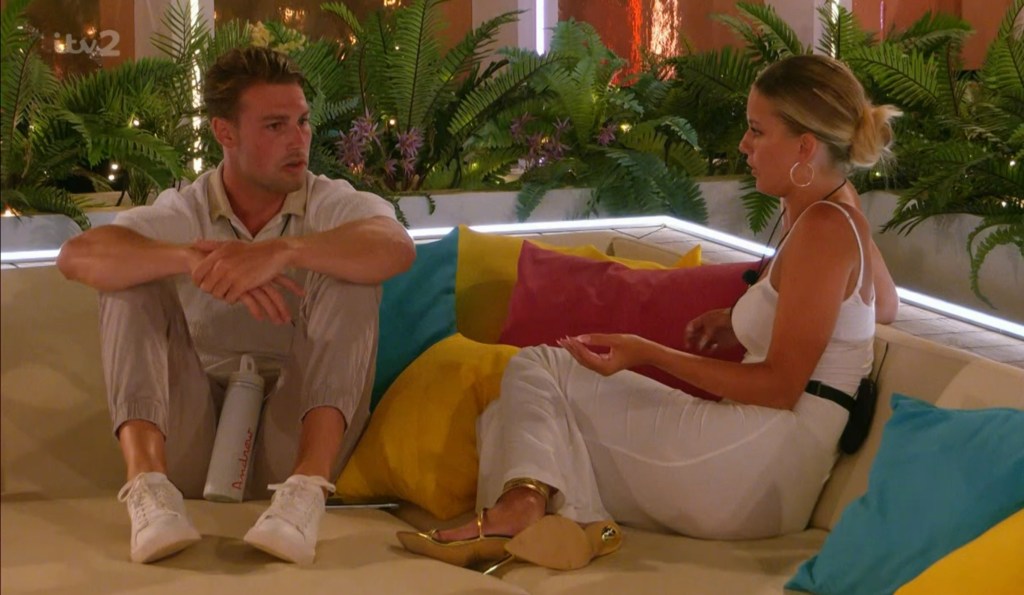
Love Island hit the U.K.’s screens in 2015. Its premise? Toss ten singles– five men and five women –in a tropical villa in a resort location… all in the name of finding love. They will immediately “couple up” with someone of the opposite sex. If an islander is left single following a weekly recoupling, they may be dumped from the villa. The show’s winners, voted the best couple by the public, take home £50,000. The first few seasons hosted contestants who were focused almost solely on physical appearances, and who were unafraid to treat the show as an all-inclusive sexcapade Olympics. In fact, the cast members of the early seasons seemed to practically forget they were on camera all the time, and behaved as stupidly and openly as most twenty-somethings would if they were sent to a resort having only packed clothes that leave you half-naked at most. The public saw everything. This is what has always made the show unique. The islanders are sent away to the villa without their phones or any contact with the outside world. Episodes are filmed through the lenses of over 70 cameras dispersed throughout the villa, quickly edited, and aired on the British channel ITV just a couple of days– or hours –later. Islanders are given shockingly little privacy, or time alone. They are always on camera, regardless if they are sleeping, showering, having sex, or changing clothes. They sleep in a bed with the person they are “coupled up” with, in a bedroom with everyone else. They shower in a bathroom that never locks. As long as they are in that villa, they live communally, and not just in the local sense, but for the public viewing and commentary of the world.
It is undeniable– the British public is obsessed with these baring-all singles, and so was I. Having watched the entirety of one season in just a few weeks, I watched Season 7 and Season 8 when they premiered episodically, following along daily. Yet when Season 9 premiered, I found myself disinterested.
I thought the whole world must think I’m fat and ugly.
TYNE-LEXY CARSON, a former islander, for Cosmopolitan
What makes Love Island unique– its format –is exactly what serves as its smoking gun. The show is structured so that its contestants submit to constant surveillance in exchange for influencer status, love, sex, and money. Despite a concept that promises realness and authenticity, the decisions and behaviour we as an audience see the islanders exhibit are achieved through isolation from the outside world, manipulation from producers, and little mental health consultation or crisis intervention.
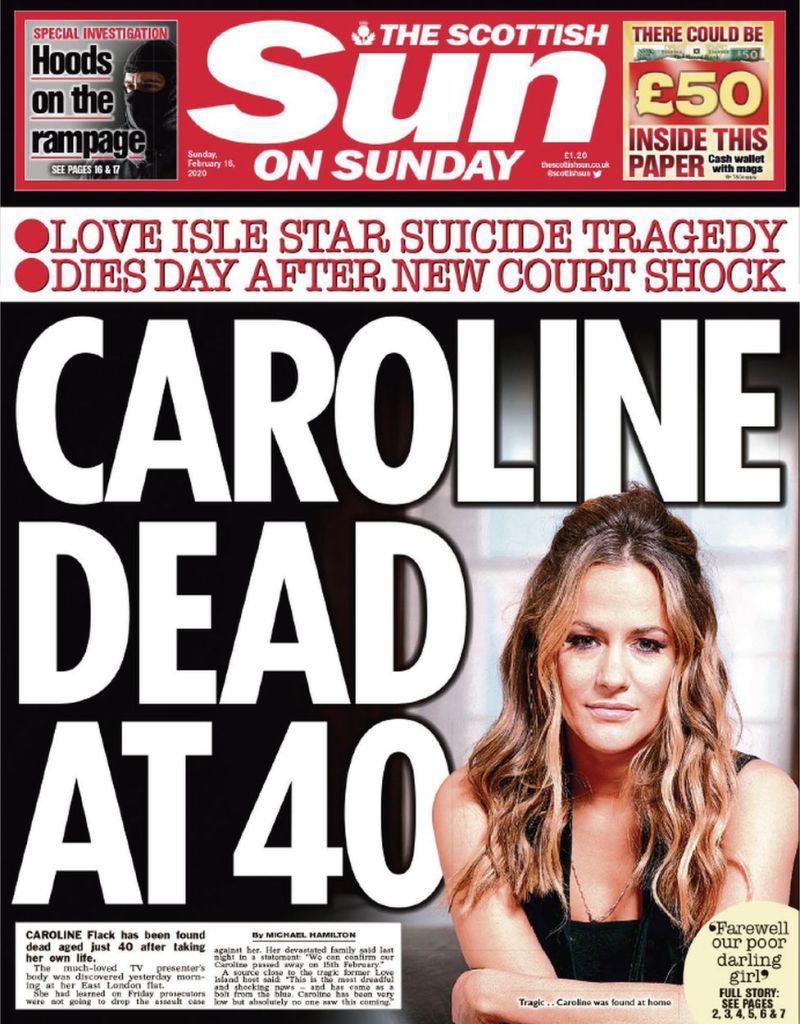
With nine seasons now under its belt and the villa planning to open its doors this summer for the big 1-0, Love Island has been connected to three suicides. Caroline Flack committed suicide in early 2020, after having been replaced as host. Former contestants Sophie Gradon and Mike Thalassitis committed suicide in 2018 and 2019– Gradon’s boyfriend also killed himself just 20 days after her death. The suicides were all largely attributed to severe online hate, mass amounts of pressure, and poor mental health support upon leaving the villa.

And while these deaths led to more on-site counselling available to contestants as well as mandated mental health evaluations, good TV is good TV, and islanders have continued to complain of poor support from therapists and producers. In 2018, during the show’s fourth season, contestant Niall Aslam disappeared from the show in its second week. He later explained that he had experienced a stress-induced psychosis due to the pressure of the presence of cameras and producer demands and was admitted to a psychiatric hospital following his exit. The producers were very aware that Niall had autism, and provided him with virtually no support during his time in the villa. In the more recent eighth season, cast member Jacques O’Neill left the show somewhat abruptly, following a love-triangle twist concerning a partner he was deeply invested in. He has since said in interviews that he was at an extremely low point and asked to leave, wanting to avoid getting physically aggressive or having an emotionally-driven outburst. Producers wanted him to stay, he stated, but eventually let him leave. In its seventh season, Love Island aired one of its most controversial episodes to date, resulting in over 25,000 complaints to Ofcom (a British broadcasting and television regulatory office). Contestant Faye Winter yelled at and berated Teddy Soares, whom she was coupled up with, for a large portion of the episode. She was livid with him because he haid said– without knowing she would later find out –that he was sexually attracted to another islander. She completely dominated the outside area of the villa, screaming at Soares and anyone else who dared approach her. This created an entirely tense environment in which several other cast members admitted they felt uncomfortable. ITV released a statement following the airing of the episode, but many viewers felt it wasn’t enough, myself included. I felt very aware that if a male contestant had been the one yelling, the episode may have been pulled altogether for its similarities to domestic violence.
When the show ends and the participants go home from the false reality they spent seven weeks in, there is an inevitable “psychological comedown,” most often coupled with at least mild depression, anxiety, or just fatigue and moodiness.
SHERI JACOBSON, psychologist, for British Vogue
Throughout its run, Love Island has undeniably perpetuated racism, prejudice, and misogyny. It is an endless disappointment and frustration to watch the singular Black female contestant in the starting cast of every season be chosen last in the first coupling. The treatment of people of colour on the series has left many turning to ITV and its producers to blame. Additionally, the show has subjected its contestants to relentless and dehumanizing online hate largely based on appearance alone, and as the series has gone on, its stars are not developing thicker skin; rather they are significantly more likely to get cosmetic surgery or see a personal trainer before entering the villa. It becomes evident that Love Island has shifted, then, from a show that could serve as a BBC Earth docuseries given its objective lens and how little its subjects mind the constantly recording cameras, to one where its stars come in camera-ready and already signed to a British talent agency.
The islanders have a rather simplistic format to follow. They wake up at the same time everyday, and then put on swimwear and lounge by the pool all day. When the sun sets, they put on their best nightclub-wear and strut about the villa’s lawn, causing whatever drama and disagreements they may. Beneath this facade adorned with vibrant colours, attractive smiles, and enviable simplicity, all there is to be revealed is a very public social experiment of how much psychological manipulation and exploitation people are willing to take for a shot at fame and money.
It is an aspirational show. We’re not trying to pretend this is reality. This is a sort of hyperreal world. Normal life doesn’t always look like this, nor should it.
RICHARD COWLES, ITV Creative Director, for The Guardian
There was a part of me that thought Love Island would not make it through the pandemic. Caroline Flack’s death amid the filming and airing of the sixth season– not to mention it being the third suicide to be associated with the show –felt like the potential signal for a white flag to be waved. With a forced year-and-a-half long hiatus due to the pandemic, I thought Love Island may have opened its villa doors one last time. I was suprised when ITV and the producers wanted to keep the show going, and suprised they didn’t feel they had any blood on their hands.
I have a feeling we aren’t meant to endure environments with over 70 cameras on us, recording us from every angle at every moment, depriving us of privacy and of the ability to live the rest of our lives without the knowledge of what awful things strangers on the internet had to say about our twenty-something selves. Reality TV is the cultural phenomenon it is, because we tend to be a rather self-absorbed species, and are naturally intrigued by viewing human behaviour from an objective lens. Does that make us all self-indulgent exhibitionists? Maybe so, or maybe not. Regardless, it seems that what ITV producers are grappling with in relation to the difficulties faced by its contestants is the intentional unwillingness to view its conventionally attractive stars as the real people they are. I don’t find it shocking that three people have committed suicide after their time on the show. I also don’t source my disinterest in watching as an act of boycotting– rather, I find the show hard to watch after considering it critically. Psychological manipulation, no matter how covered up it is with promises of fame and money, bright colours, and light-hearted fun, will take its very real toll on those it strikes.
Further Reading
D’amato, L. Love Island: An Experiment With Control. https://grainofsaltmag.com/love-island-an-experiment-with-control/
Peele, A. How Love Island Became A TV Reality of Sex, Fame, and Sometimes Tragedy. https://www.vanityfair.com/style/2022/06/how-love-island-became-a-tv-reality-of-sex-fame-and-sometimes-tragedy
Berrington, K. Love Island: What do Psychologists Make of it? https://www.vogue.co.uk/article/the-psychological-impact-of-love-island
Petter, O. Women’s Aid Criticises Love Island for ‘Disregarding Women for Entertainment.’ https://www.independent.co.uk/life-style/women/love-island-womens-aid-coco-criticism-b2262994.html
Shadijanova, D. How Shows Like Love Island Highlight Racism in Dating. https://www.cosmopolitan.com/uk/reports/a30564608/racism-love-island/
My favourite video essay on Love Island: https://www.youtube.com/watch?v=S8VqPxYM2tY
 from sophie's pages